


Just as humans break out their winter coats when the temperatures drop and snow starts to fall, some horses also need an extra layer this time of the year.
“Horses, as big as they are, are fairly fragile. So, what can happen is if they get cold and wet, they can get sick,” said Natasha Tarasov, owner of The Horse Connection based in Bedford, NY. “[Blankets] can keep them dry and basically, dry is warm.”
The Horse Connection offers gear for riders and horses, including a variety of blankets and sheets to clothe horses throughout the year. Equine Advocates has been buying supplies and blankets from The Horse Connection for more than two decades. Natasha says there are different types of blankets and choosing the right one comes down to knowing your horse. It’s important to determine, one: If your horse needs a blanket, and two: What type of blanket to use. She says older horses, particularly ones who can’t maintain their weight as well as when they were younger, and horses with clipped hair benefit greatly from having a blanket during the winter months.
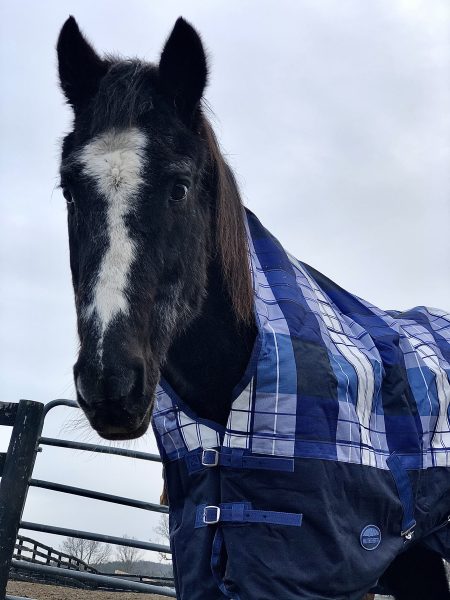
There are two main styles of horse blankets: A turnout, or outdoor, blanket and a stable, or indoor, blanket. Stable blankets are more lightweight and are not waterproof, while turnout blankets tend to be heavier, more durable, and waterproof. Both styles can come in a variety of weights for layering.
“The most important thing is a good turnout rug, because if the horses are going to be out, that’s where they’re most susceptible to the elements,” said Natasha.
Horses that are outside more could also wear a neck cover that attaches to the turnout blanket. A neck cover goes all the way up to their ears and will keep their necks dry and warm.
How often your horse stays outside will also factor into the material that makes up your chosen blanket. The colder the temperatures and the longer a horse is exposed to them, the heavier the blanket should be.
“Better ones will usually be a 1200 denier, so that’s very durable outer material. The fill is going to be the lightweight technical fill, kind of like a puppy jacket,” said Natasha. “You want to make the blanket physically as lightweight as you can, but as warm as you can.”
Denier refers to the thickness of the threads used to make the fabric in the outer layer of the blanket, and it helps indicate how durable the blanket will be.
However, Natasha says it’s important to monitor the weather and keep an eye on the weight of the blanket that you put on your horses, so they don’t overheat. She says if a blanketed horse gets too hot, they can get sweaty and then can get chilled which could then lead to them getting sick.
Natasha says because every horse has individual needs, there isn’t a set guideline for what blankets to use or when to put them on. She says her general rule of thumb though is to start with light layers when temperatures drop into the forties, move to a midweight blanket when they drop into the thirties, and move to a heavier blanket when it gets to 30 degrees Fahrenheit or below.
So, when you bundle up as you head outside over the next couple of months, remember to think of your horses too.
This column was published in Berkshire Animal World’s December 2021 issue.