


There aren’t many things horses and humans have in common, but there is one important health-related concern we both share – the threat of heat exhaustion and dehydration. When the sun shines across the fields and the temperature rises, horses need to be monitored and cared for, so they don’t overheat.
Sweating it Out
Unlike cats, dogs, or other furry companions, horses sweat all over their bodies. Because of their coat, it can be difficult to see where or how much they are sweating from a distance. As you get closer, though, there are ways to check the sweat patterns of a horse to see how it’s reacting to the heat.
“They’ll have a wet appearance to their coat, and they’ll be wet to the touch. Some of them will actually be warm to the touch,” said Melissa Murray, Equine Care Manager at Equine Advocates. “Oftentimes you’ll see the sweat patterns typically on their neck, under the mane, it’s on the chest, it’s on the hindquarters, underneath the tail.”
While sweat is a sign to keep an eye on a horse, it’s better than noticing a horse is dry on a hot day. A dry coat could be a sign of dehydration.
Heat Exhaustion and Distress
A way to see if a horse is in heat distress is to do a ‘pinch test.’
“You take the loose skin that’s on their neck and you kind of give it a little pinch and you peel it away from their neck muscle and then let go of it,” said Murray. “It should snap right back or very quickly come back down and lay flat on the neck. If it stays pinched out and you’re not touching it, they’re dehydrated.”
At that point, you should call a vet, because the horse will need intravenous, or IV, fluids.
Other signs to look out for are lethargy, difficulty breathing, and a high core body temperature. A normal range for a horse is typically between 98 and 100 degrees, so if the body temperature is above 100 degrees, you should call a vet.
How to Cool Down an Equine
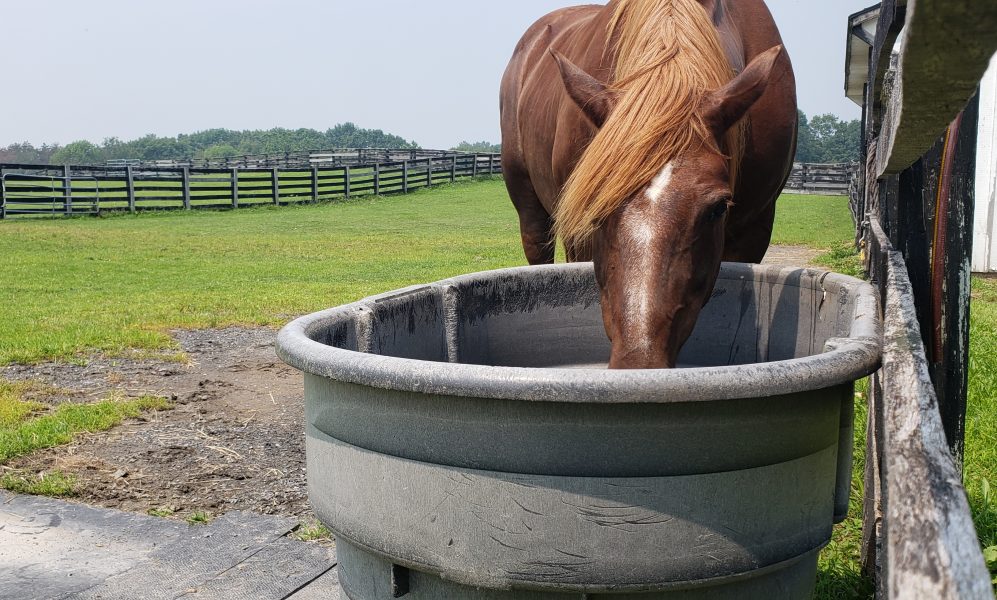
There are several ways to keep horses cool during the hotter times of the year and to prevent heat exhaustion. Make sure they have access to plenty of cool water and shade. It’s also good to give them access to salt or mineral blocks, since horses lose large amounts of the essential mineral in their sweat. Murray says if you find a horse isn’t using the salt block, you can supplement them with a feed-through electrolyte.
“It’s similar to a powdered Powerade for us, or Gatorade for us,” she said. “You can mix it into their grain, or you can mix it directly into their water. That way, as they drink or when they eat their meal, they get the salt and all the different electrolytes, the potassium and sodium, and all that good stuff that they would need.”
You can also sponge down horses with cool water and sweat scrape them afterwards, which is wiping off the excess water.
Daily Heat Care at Equine Advocates
At Equine Advocates, we follow this advice every day there are high temperatures. On these days, our staff will double-check on the sanctuary’s 80+ residents during the afternoon. They look for signs of heat distress and make sure everyone is drinking water. Staff will also check on the older equines and those who have heaves, or recurrent airway obstruction, a respiratory disorder that affects a horse’s breathing rate.
“A lot of times the heaves horses tend to have more trouble breathing, especially when the humidity is really high,” said Murray.
Murray also says if they have elevated respirations, the sanctuary has access to a nebulizer to give them albuterol, similar to people using an albuterol inhaler for asthma.
Overall, a summertime strategy comes down to adopting the same mindset of heat protection for humans to equines – make sure they drink water and stay cool, so they can enjoy a sunny day with minimal distress.
This column was published in Berkshire Animal World’s August 2021 issue.