


When the weather outside is frightful, many people tend to stay indoors, bundle up, and relax with a warm drink. For equines, though, staying warm and out of the elements takes more effort and often, advanced preparation before the cold temperatures and winter elements arrive. Equine Advocates Equine Care Manager Melissa Murray says it’s good to start preparing to keep horses warm in the fall.
“One of the biggest things that you’re going to want to do is you’re going to want to start to slowly increase hay consumption,” said Murray.
Murray says it’s especially important to increase hay consumption early on for horses whose diet mainly consists of eating grass out in the pasture. This is because grass starts to lose its nutritional value due to the weather changes during the winter months. Also, ice and snow can make it difficult for horses to access the grass. She says both increasing the amount of hay given to horses and increasing the frequency horses receive hay helps keep them warm.
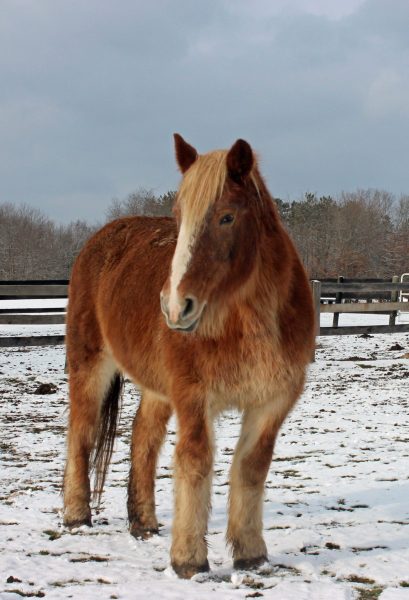
“Hay is equal to a furnace; the more hay they eat, the hotter their little furnace and their body will burn,” said Murray.
Staff at Equine Advocates also close stall windows during the winter months to help further keep the equines warm when they’re inside.
“When you put horses into the stalls, their body heat will start to radiate and warm that area up for them,” she said.
Wearing turnout blankets is another way to keep horses warm and dry when they’re outside in their pastures, although it isn’t necessary for every horse every day.
“Some horses, they don’t actually need blankets,” said Murray. “[Some horses] have thick enough coats, they’re able to produce enough body heat that the only time they’ll really get chilly is if they’re actually soaked down to the skin. Then you’ll see, so you want to keep an eye on them.”
Murray says if you’re expecting a snow or ice storm to come through the area, then it would be a good idea to put a lightweight blanket on those horses, so their bodies don’t get wet from the precipitation.
“They might be a little warmer right now, but at least they won’t be freezing and shivering later,” she said.
Murray says keeping equines warm isn’t the only concern during the colder months. Dehydration can also occur during the winter because horses aren’t tempted to drink colder water.
“One of the biggest health risks in the wintertime for the animals is colic due to dehydration because they’re just not drinking,” said Murray.
She says this can be especially true for horses whose diet mainly consists of grass, but now the majority of their diet is just dry hay. This is because grass contains moisture, which can help increase their water intake during the rest of the year.
Murray says you can limit the risk of dehydration by giving horses access to large salt blocks and mineral blocks that they can lick, which will encourage drinking water. Also, if you notice that a horse’s water intake is particularly low, you can give them electrolytes just like you would in the summertime.
A third health issue to keep in mind during the winter is the risk of injury. Ice on the ground not only hinders a horse’s ability to graze, but it also poses a safety risk, especially in a pasture with hills or dips. Murray also says it’s important to keep an eye on increasing lameness in older horses or horses with previous injuries during the winter. She says you can change up the pain management certain horses receive, such as increasing anti-inflammatory medication or scheduling joint injections, before the worst of winter weather arrives.
By keeping these winter health and safety concerns in mind, horses can stay warm and dry through the beginning of the new year.
This column was published in Berkshire Animal World’s January 2022 issue.