


Just like humans, equines’ bodies change as they age. Horses reach their “senior” stage of life when they hit their mid-teens. At Equine Advocates, eighty percent of our equine residents are 15 years or older, and of those, seven residents are more than 30 years old. So, our staff knows what older horses need to thrive and how that treatment differs from our younger horses.
“Once they start to hit maybe their mid to late teens, you might see, kind of like when we’re in our forties or fifties, we start to wake up with a couple more aches and pains than we ever did, and that’s when you might see some arthritis setting in,” said Equine Care Manager Melissa Murray.
Murray says one of the best things for arthritis is movement, and that’s why we make sure all our horses get access to turnout. However, the turnout time differs depending on the horse’s age and health status. For those who have horses under their care, the ability to ride older horses as frequently as when they were younger could change over time, but as long as they consult with their veterinarians, a gentle riding program can do wonders for an equine’s joints, as it keeps them lubricated and moving well. Allowing senior horses to spend time with younger horses can also be beneficial.
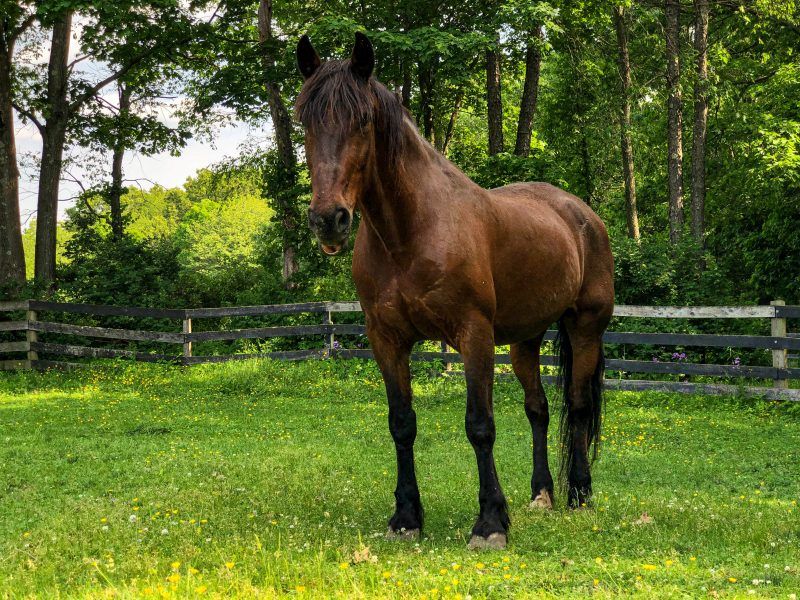
“We have plenty of mixed-age herds,” said Murray. “We have some horses [who] are only ten, 11, or 12, and they’re out with horses that are well into their twenties. Honestly, I think it keeps our older horses younger because they want to keep up with their younger companions, which, as long as they’re physically healthy to do so, is great for them, because it keeps them moving around.”
Another thing to focus on is dental care. Horses will start to lose molars into their twenties, and it’s important to make sure they can chew and eat their food properly. One sign of teeth issues owners can look out for is if the horse can’t properly chew regular hay anymore and starts quidding.
“‘Quid’ is a little lump of chewed-up hay that they wind up spitting out,” said Murray. “If you see your horse is quidding, you want to make sure that he gets a dental exam right away, but also it might be time to start supplementing their forage with hay cubes or pellets.”
One trick is to add water to hay cubes or pellets to soften them, making them easier to chew.
Other dietary changes include switching to specific grains that are made just for senior horses. They’re usually very high in fiber and have a higher fat content to help them keep on weight, which can be difficult to do as they age. High-quality vitamin and mineral supplements are also very helpful for senior horses because they sometimes don’t absorb nutrients as well as younger equines. Their guts start to slow down a bit once they hit their mid to late twenties.
Farrier care also continues to be important in the later years. However, routine care may change for horses who develop bad arthritis, as it can be difficult to pick up their feet for the farrier to trim hooves. An experienced farrier will know how to best deal with these issues and may suggest that a veterinarian prescribe medication to help ease the discomfort. When it comes to hooves, owners should also look for any new signs of lameness. Older horses may need special shoes to help with this.
With proper care and treatment, horses can live well into their thirties.
“Between the advances in veterinary medicine and nutrition for them, they’re living much longer and much more happier lives,” said Murray.
While their bodies may not move the same way, these beautiful creatures still have so much to offer us as animal companions, which is why it’s important to take care of them properly as they reach their senior years.
This column was published in Berkshire Animal World’s October 2022 issue.