


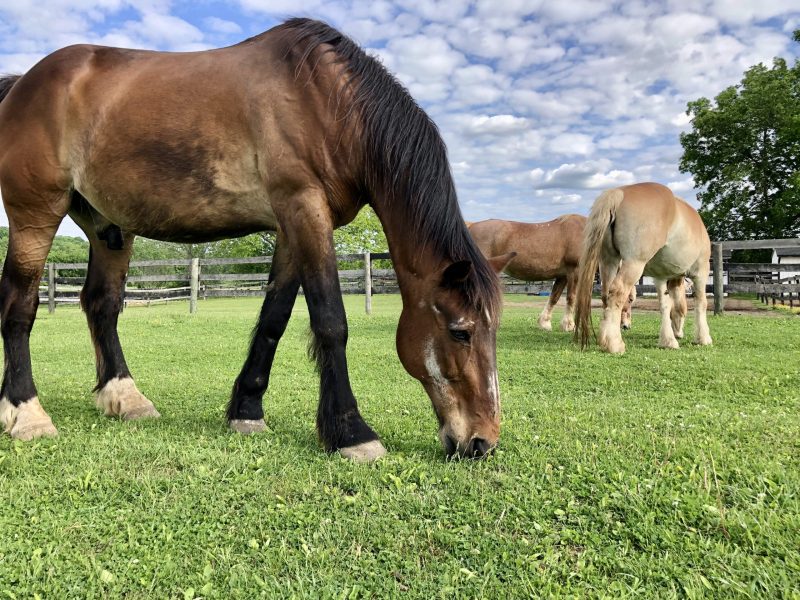
For humans, the saying goes, “An apple a day keeps the doctor away.” But what about equines? March is National Nutrition Month, and it’s an important reminder that proper nutrition is a critical part of animal care. The main nutrient categories that need to be met are carbohydrates, protein, fat, vitamins, minerals, and water, but the balance of meeting these categories will look different between individual equines. Nutritional requirements are influenced by several factors, like body mass, age, and metabolic efficiency. At Equine Advocates, ensuring that all 80+ residents, who all have different health and dietary needs, receive a proper diet is a vital part of our daily work.
“Proper nutrition is so important for domesticated equines because typically wild equines like Mustangs and zebras and donkeys, they graze and that’s all they do is graze,” said Equine Advocates Equine Care Manager Melissa Murray. “They are constantly eating. So, for domesticated equines, because they’re limited on space, we have to supplement.”
Every resident at the sanctuary gets hay, even those who can live off strictly eating grass. This is to prevent overgrazing in the pastures and to give every equine access to food during hot or inclement weather when the animals prefer to stay in their stalls. This way, they still get a proper diet even when they can go out into their fields.
Not every equine’s diet is so simple, though. Some need grain in addition to hay and grass since grain provides more calories. As a rescue organization, many residents arrive malnourished or starved, and our staff needs to help bring them up to a healthy weight. The Henneke Horse Body Condition Scoring System is a way to check an equine’s body condition to determine what dietary needs they have. The scale ranges from 1-9, with 1 meaning the equine is emaciated and 9 being very fat or obese.
“If they’re a low number on the Henneke Scale, you’ll start to refeed them slowly and gradually,” said Murray. “Once the equine is back up to weight, then we can start to reduce the grain without seeing a reduction in its body condition.”
Finding the right balance is key since you want to help the equine maintain a healthy weight, and overfeeding can lead to obesity. Murray says you have to constantly body score equines to adapt their diet as needed since nutritional requirements change with age and certain health issues that could develop.
We also have several types of supplements to help meet specific needs, like equines with joint issues, low Vitamin E deficiencies, and poor hoof quality. No equine is the same, so it’s a team effort to make sure every individual dietary need is being met.
“It’s a lot of understanding body scoring,” Murray added. “It’s understanding what can be added… So, say we have a horse that really shouldn’t be having sugars, but they might need some extra calories; What we can do for them is you can add in specific supplements.”
In that case, you can supplement a diet with flaxseed, hay cubes, or hay pellets, which are lower in sugar content. Lastly, access to an adequate supply of clean water is so important.
So, let’s bring it back to the “an apple a day” proverb – They may not be the best daily treat for equines as they’re high in sugar content, but apples (and other treats) paired with grain, hay, and essential nutrients all contribute to a balanced nutrition to keep equines in the best state of health possible.
This column was published in Berkshire Animal World’s March 2023 issue.